


Prefer this as a video? Watch here!
Prefer this as a podcast? Listen here!
Hello! Welcome to my weekly newsletter!
Enjoy a dose of my playwriting process,
writing confessions, and all the mess in between.
You know how they say:
“Opinions are like assholes — everybody’s got one.”
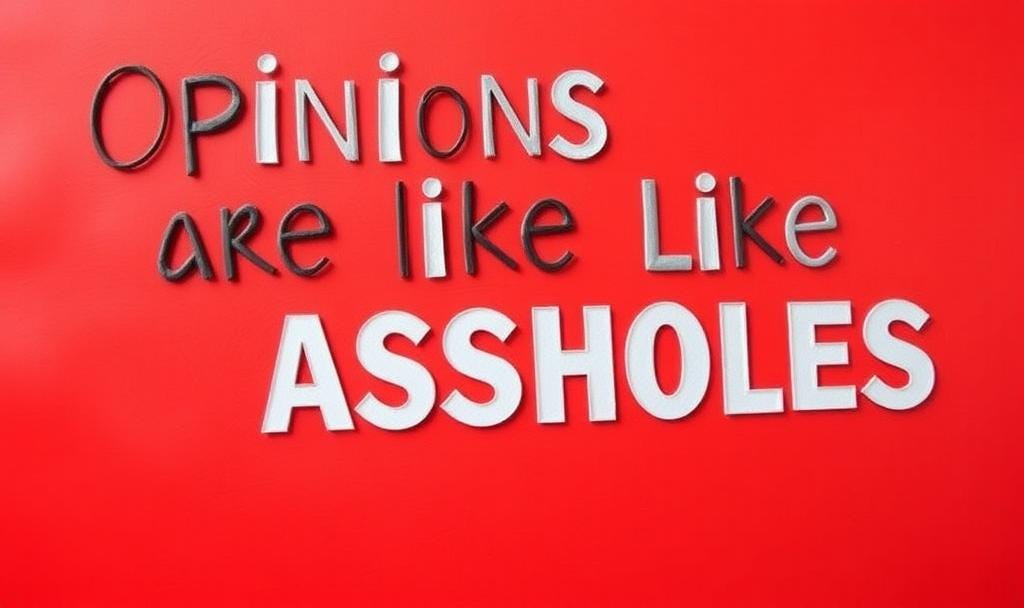
Well, in a reading or feedback session?
Everybody’s got five (at least).
And that’s the thing.
Everyone will have something to say.
(even me lol)
But that doesn’t mean you have to listen to everyone.
You’re the playwright.
You get to decide what stays and what goes.
So here’s how I filter feedback like a pro:
Does It Still Tell the Story You Want to Tell?
Feedback can pull your play in a thousand directions.
People will start writing their version of your play in their heads.
Admittedly, I’ve done it too.
Because we all bring our lived experiences into the space,
and sometimes that leads to big, bold, entirely different suggestions.
But here's the deal:
Only you know the story you're trying to tell.
Hold on onto that.
Let your play speak from your truth.
Even if your truth is messy, confusing, or unresolved.
Don’t let feedback dilute your true intention
of writing this story in the first place.
Is It Valuable?
Some feedback will sound like this:
“I think the play should end here.”
“Maybe cut down your stage directions?”
“Could the walls be green instead of blue?”
“Your character’s name should be Barty Crouch the III.”
Now ask:
Does this note help clarify the story?
Does it challenge me in a good way?
Or is it just someone projecting their own preferences?
You don’t owe your play to anyone’s aesthetic taste.
There’s a reason you made those writing choices.
Is the reason dramaturgical?
Does it serve a purpose?
Even if the purpose is that that’s your signature.

Keep What Resonates, Throw Away The Rest
Feedback is not a checklist.
It’s a buffet. One that doesn’t end until you end it.
And like every buffet, you only take what you want,
what you can finish. Because you know if you get greedy,
you won’t be able to ever finish it.
If five people give the same note, sure, that’s worth considering.
If one person says “cut the ending” but that’s your favourite part? Ignore them.
Or if they have given a valid reason,
revise it on your terms.
But do note: in readings/feedback — DON’T defend your work.
Just listen. And take note.
You’re not fragile for rejecting feedback.
You’re a playwright with taste.
Your own taste.
Write Everything Down But…
Yes, in feedback, I write everything down.
Anything people say (that is valuable),
I write them down.
Then,
I ignore the play.
I ignore the feedback.
For a few days, weeks, or maybe even months.
But while I’m “ignoring it”, my brain is doing the filtering for me.
It’s remembering the feedback that resonated more,
and forgetting all the other noise.
When I’m ready to revisit the work, to edit,
I will read through the feedback a few times.
(Usually my handwriting is so shitty, that I have no idea what I wrote)
Then I put my notebook away,
and I write.
What’s valuable would’ve stuck.
What isn’t wouldn’t evaporated itself away.
So the next time you’re in a feedback session,
remember all these things.
It will save you from crashing because of your imposter syndrome.
I totally get you. I’m the same. ;)
What about you? What do you do to filter out feedback?