


Hello! Welcome to my weekly newsletter!
Enjoy a dose of my playwriting process,
writing confessions, and all the mess in between.
Developing your own style can be… difficult.
And comparing yourself to other writers? Also difficult.
Everyone has their own thing:
“It’s very Sarah Kane.”
“This screams of Chekhov.”
“So Ibsen.”
“Totally Tennessee Williams.”
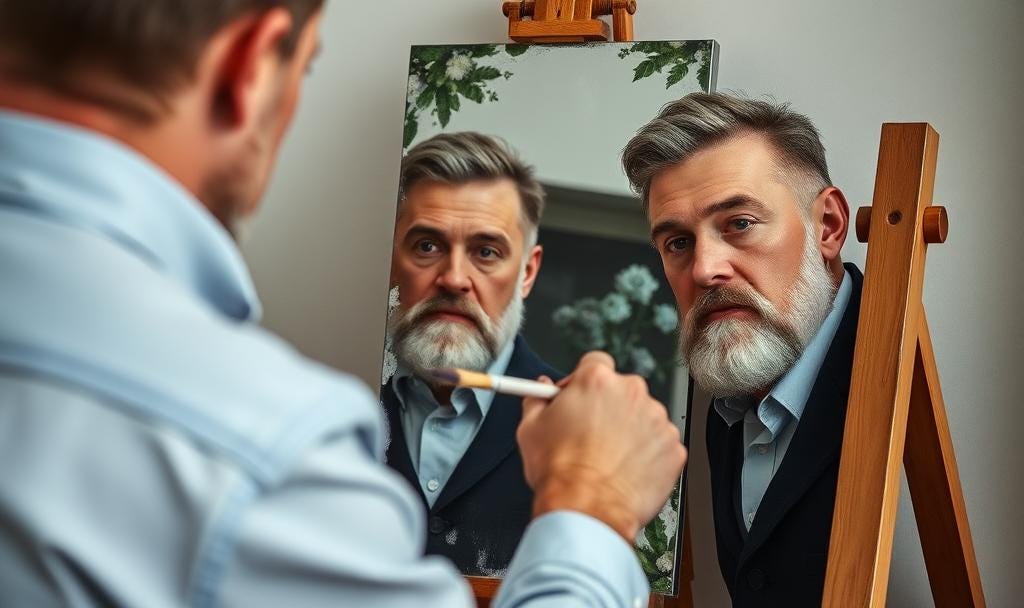
Why do we do that?
Does it help? Or is it limiting?
And more importantly:
When do you say, “This is my style”?
Do You Want to Be Known?
That’s the real question.
Do you want someone to read your play and go,
“Ah, this is so [insert your name here]”?
Do you want to be recognisable?
Because that’s how you begin to carve out your own “genre”,
your own voice, your own weird, stubborn corner of the theatrical universe.
Theatrical disobedience, as I say.
How I Started Finding My Style
There are some things I kept doing, over and over, without realising it… until I did.
1. Rhythmic, back-and-forth dialogue
I write scenes where characters volley one-word replies.
Fast. Violent. Sometimes playful. Always emotionally loaded. And purposeful.
It’s become one of my subconscious signatures. And now I claim it.
2. Unpredictable structure
I hate being able to predict endings. And I usually always do.
So I write in ways that twist, fracture, and subvert.
Sometimes it’s disgusting. Sometimes violent.
Sometimes there’s kink, fourth walls, fifth walls, sixth dimensions.
(I don’t even know what those mean — but lets just say, I go there.)
3. Neo post-dramatic realism (?)
(i don’t think that’s a real thing)
I’m obsessed with plays that aren’t quite realism… but also kinda are.
They blur the line.
They feel too wild to be real. But just real enough to hurt.
Some of my plays are grounded. Others feel like they exist outside gravity but still don’t float like how you’d expect. I like that contradiction.
4. Patterns, objects, and food
I use recurring motifs to ground my chaos:
In AFTERTASTE, it’s the fig flatbread.
In John Paul Parker Smith, it’s the pie.
In POLY (Polygraph), it’s the airplanes.
If you haven’t read my article on patterns:

These anchors help the audience hold onto something amidst the madness.
Why?
Give Them Something to Hold Onto
Even if your play is weird, wild, and boundary-breaking,
audiences still need something to hold onto.
Not because they’re simple, but because they’re searching.
For meaning.
For structure.
For a sign that they know what they’re doing, even if the world feels unhinged.
Think about religion. Think about God.
People look for meaning in chaos.
So give them something.
An object. A motif. A line. A pattern. A feeling.
A word.
These are just some of the things I do.
There’s more. Always more.
But this? This is the start of what makes something Ian Skatu style.
And it took me a while to get here.
But I know this is not just it. I’m still developing my style.
So don’t stop writing.
You will find it.
What about you? What’s your style? What’s your signature?